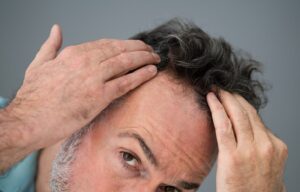
Hair changes are a natural part of aging, but that does not mean you have to accept a hairstyle that no longer feels like you. For many men and women over 60, thinning hair, a widening part, a receding hairline, or a loss of overall volume can gradually change their appearance and the way they feel about it.
Some people notice that their hair no longer holds the same style it did ten years ago. Others find themselves choosing hairstyles specifically to conceal thinning areas, avoiding photographs, or spending more time trying to create the appearance of fullness.
Fortunately, modern hair restoration and replacement solutions offer more options than ever before. From customized hair toppers and human hair wigs to nonsurgical hair systems and medical treatments, there are ways to address hair loss at different stages.
The key is understanding what is causing your hair to thin, which solutions can realistically help, and how to choose an approach that fits your lifestyle.
Why Does Hair Become Thinner After 60?
Hair density, growth patterns, texture, and pigmentation can change with age. However, not all hair loss after 60 is caused by aging alone. Understanding the difference matters because some causes of hair loss are treatable, while others may benefit from cosmetic hair replacement.
Age-Related Changes in Hair Growth
Hair follicles cycle through periods of growth, transition, rest, and shedding. With age, some follicles produce finer or shorter hairs, and overall hair density may decrease.
Hair can also become more fragile, making breakage more noticeable.
These changes may affect both men and women, although the pattern and extent of thinning vary.
Female Pattern Hair Loss After Menopause
Female pattern hair loss, also called female androgenetic alopecia, is a common cause of progressive thinning in older women. It often appears as a widening central part, reduced volume across the top of the scalp, or increased scalp visibility around the crown.
Hormonal changes associated with menopause may influence hair characteristics, but female pattern hair loss is multifactorial and often involves genetic susceptibility. Unlike sudden shedding, pattern hair loss typically develops gradually.
Male Pattern Baldness After 60
Male pattern hair loss may begin decades before age 60 and continue progressing later in life. Common patterns include temple recession, a thinning crown, and reduced density across the top of the scalp.
Some men retain substantial hair along the sides and back, making them potential candidates for partial hair systems or, depending on medical suitability, hair transplantation.
Medical Conditions and Medications
Hair loss should not automatically be attributed to age. Thyroid disorders, iron deficiency, certain medications, inflammatory scalp conditions, nutritional problems, and other medical issues can contribute to thinning or excessive shedding. Sudden hair loss, patchy bald spots, scalp pain, or rapidly progressing thinning should be evaluated by a dermatologist or other qualified healthcare professional.
How to Recognize the Different Types of Hair Thinning After 60
Not all hair loss requires the same solution. The location, severity, and progression of thinning can help determine which restoration or replacement options are worth exploring.
| What You Notice | Possible Explanation | Potential Next Step |
| Widening part | Female pattern hair loss | Medical evaluation, hair topper, or other coverage |
| Thinning crown | Pattern hair loss | Hair system, topper, or medical treatment |
| Receding hairline | Male pattern hair loss or other causes | Hairline-focused replacement or treatment |
| Overall loss of volume | Aging, diffuse thinning, or shedding | Identify cause and consider volume-enhancing solutions |
| Sudden increased shedding | Telogen effluvium or another condition | Medical assessment |
| Bald patches | Alopecia areata or another scalp disorder | Dermatologist evaluation |
| Hair breaking easily | Hair shaft fragility or damage | Gentler hair care and appropriate conditioning |
One important distinction is the difference between losing hair from the follicle and experiencing hair breakage.
Fine, fragile hair may appear thinner because the strands break before reaching their previous length. Meanwhile, progressive follicle miniaturization can cause individual hairs to become finer over time.
The appropriate solution depends on which process is occurring.
The Biggest Hair Styling Challenges After 60 and How to Address Them
Many people first become concerned about hair loss when their usual hairstyle stops working. A hairstyle that previously looked full and balanced may suddenly expose the scalp or require significantly more effort to maintain.
When Your Part Keeps Getting Wider
A widening part is one of the most recognizable signs of female pattern hair loss. Changing the part location or using volumizing products may temporarily reduce scalp visibility, but these techniques cannot replace missing density.
For women with thinning concentrated along the part or crown, a custom hair topper may provide targeted coverage while allowing the remaining natural hair to stay visible.
When Your Hair No Longer Holds Volume
Hair that has become finer may struggle to maintain lift, particularly around the crown. Heavy styling products can weigh down fine hair, while excessive teasing and heat styling may contribute to breakage. Lightweight products and appropriate haircuts may help improve the appearance of fullness. For more substantial volume loss, hair integration systems or customized hair replacement may provide a more noticeable cosmetic improvement.
When Your Hairline Changes the Shape of Your Face
A receding hairline can alter facial proportions and make familiar hairstyles more difficult to maintain.
Modern hair systems can be customized with natural-looking density, temple shapes, and hair direction to create a hairline suited to the wearer’s age and features.
A realistic result does not necessarily mean recreating the hairline someone had at age 20.
In many cases, a slightly mature hairline with appropriate density produces a more believable appearance.
When Gray Hair Becomes More Difficult to Style
Gray and white hair can have different textures and styling characteristics from previously pigmented hair. Some people experience increased coarseness, dryness, or changes in curl pattern, while others notice that their hair becomes finer. Hair replacement solutions can be customized to incorporate gray, silver, white, or blended tones, allowing the result to complement the wearer’s natural appearance.
Hair Replacement Options for Women Over 60
Women experiencing hair loss after menopause often want a solution that restores fullness without looking artificial or requiring extensive daily maintenance.
Modern hair replacement options can be tailored to different degrees of thinning, from a widening part to nearly complete hair loss.
Hair Toppers for Thinning Hair and Widening Parts
Hair toppers are partial hairpieces designed to provide coverage in specific areas, usually along the part or crown.
They can be particularly useful for women who still have healthy hair around the sides and back but have lost significant density on top.
A well-fitted topper should complement the wearer’s natural hair color, texture, length, and density.
However, clip-in toppers may not be appropriate for extremely fragile hair because attachment points can place tension on existing strands. Alternative attachment methods or a full wig may be more suitable.
Custom Human Hair Wigs for Advanced Thinning
For women experiencing widespread hair loss, custom human hair wigs can provide full coverage and styling flexibility.
Unlike a one-size-fits-all wig purchased online, a professionally fitted wig can be selected or customized according to head measurements, facial features, preferred hairstyle, and comfort requirements.
At Eldorado Hair Replacement Center, human hair wigs are available with personalized styling and fitting services.
For older women, a realistic wig does not necessarily need to recreate the thickest hair they ever had. Often, a slightly softer density with carefully blended gray or silver tones creates a more natural result.
Hair Integration Systems for Diffuse Thinning
Hair integration systems are designed to work with existing natural hair rather than replace all of it.
Depending on the system, natural hair may be blended through or around the replacement hair to create additional coverage and volume.
These systems can be useful for certain patterns of diffuse thinning, although suitability depends on the strength and distribution of the remaining hair.
A professional assessment is important because fragile hair may not tolerate every integration or attachment method.
Hair Replacement Options for Men Over 60
Men seeking hair replacement after 60 often prioritize a natural-looking hairline, comfortable fit, and a hairstyle that is easy to maintain. The objective is not necessarily to recreate the hair density of early adulthood. Instead, a customized solution can provide fuller coverage while preserving an age-appropriate appearance.
Nonsurgical Hair Systems for Receding Hairlines and Bald Spots
Modern nonsurgical hair systems can provide coverage for a thinning crown, receding hairline, or more extensive male pattern baldness.
These systems are typically customized to match the surrounding hair and can incorporate realistic hairline shapes, natural hair movement, and gray or white hair.
Eldorado offers custom hair systems in Baltimore, including Reallusions®, which is designed to provide a natural-looking frontal hairline with age-appropriate density. For men who prefer a short hairstyle, the blending between the hair system and the natural hair around the sides and back is particularly important.
Hair Transplants After 60
Age alone does not automatically disqualify someone from hair transplantation. However, suitability depends on several factors, including donor hair availability, the pattern and stability of hair loss, overall health, scalp condition, and expectations. A hair transplant relocates existing follicles rather than creating new ones. Consequently, individuals with insufficient donor hair or extensive thinning may not achieve their desired density through surgery alone. Older adults considering hair transplantation should undergo a medical assessment and discuss the procedure’s risks, recovery requirements, and realistic outcomes.
Natural-Looking Gray Hair Replacement
One concern among older men is whether replacement hair will match their existing gray or white hair. Custom hair systems can incorporate combinations of natural colors, including salt-and-pepper blends, silver, white, and darker tones. Matching the percentage and distribution of gray hair is often more convincing than using a single uniform color. Hair texture, curl pattern, and density are equally important.
Comparing Hair Restoration and Replacement Solutions After 60
Choosing the right solution requires balancing appearance, maintenance, medical suitability, and personal preferences.
| Solution | Best Suited For | Main Benefit | Important Consideration |
| Hair toppers | Localized crown or part thinning | Targeted coverage | Attachment must not damage fragile hair |
| Custom wigs | Widespread thinning or baldness | Full coverage and styling flexibility | Requires proper fitting and ongoing care |
| Nonsurgical hair systems | Receding hairlines, crown loss, partial baldness | Immediate cosmetic coverage | Maintenance and attachment requirements |
| Hair extensions | Mild volume loss with strong natural hair | Additional length and fullness | Can cause traction on fragile hair |
| Hair transplantation | Suitable candidates with adequate donor hair | Natural hair growth from transplanted follicles | Surgery, recovery, and variable results |
| Low-level laser therapy | Certain cases of pattern hair loss | Potential improvement in hair density | Results vary and require ongoing treatment |
| Prescription hair loss treatment | Diagnosed, medically treatable hair loss | May slow loss or encourage regrowth | Medical supervision and ongoing use may be necessary |
The distinction between hair restoration and hair replacement is especially important.
Medical and surgical hair restoration treatments aim to preserve or improve biological hair growth. Hair replacement solutions, including wigs and hair systems, provide the appearance of additional hair without requiring follicles to regrow.
For someone who wants an immediate visual improvement, nonsurgical hair replacement may be appealing. For someone who wants to preserve existing hair, medical treatment may be appropriate. In some cases, both approaches can be considered together.
What About Hair Growth Treatments After 60?
Not everyone experiencing hair loss needs or wants a wig or hair system.
Some people may benefit from medical treatments intended to slow progression or improve hair growth.
Minoxidil for Age-Related Pattern Hair Loss
Topical minoxidil is an FDA-approved treatment for certain types of male and female pattern hair loss. It may help slow hair loss and promote regrowth in some individuals, although results vary. Treatment generally requires consistent use over several months, and benefits are usually lost after discontinuation. Older adults should discuss potential side effects, existing health conditions, and medication interactions with a healthcare professional before starting treatment.
Prescription Treatments for Male and Female Pattern Hair Loss
Depending on the diagnosis, a dermatologist may discuss prescription medications such as finasteride or other treatments. Some medications are approved for specific patient populations, while others may be prescribed off-label. The decision should account for medical history, potential side effects, and the expected benefit.
Laser Hair Rejuvenation
Low-level laser therapy is a noninvasive option that may help improve hair density in some people with androgenetic alopecia. Results are not guaranteed, and treatment is generally more relevant to individuals with functioning follicles than those with extensive areas of permanent baldness.
Eldorado offers laser hair rejuvenation among its hair restoration services.
Why Hair Growth Supplements Are Not a Universal Solution
Hair growth supplements are heavily marketed to older adults, particularly women experiencing postmenopausal thinning. However, taking additional vitamins does not necessarily improve hair growth when no deficiency exists. Nutritional deficiencies should be identified and addressed appropriately, but excessive intake of certain supplements can be harmful. If hair loss is unexplained, a dermatologist may recommend testing based on symptoms, medical history, and examination findings.
How to Choose Natural-Looking Hair Replacement After 60
One of the most important aspects of successful hair replacement is ensuring that the finished hairstyle complements the individual’s appearance rather than looking dramatically different.
Match Hair Density to Your Features
Extremely dense hair can look unnatural when it contrasts with facial features, remaining hair, or an established hairstyle. A professional hair replacement specialist can help determine a density that provides adequate coverage while maintaining a believable appearance. For some individuals, a gradual increase in volume may be preferable to a dramatic transformation.
Pay Attention to the Hairline
A natural-looking hairline is particularly important for men with receding hairlines and women with thinning around the forehead. Hairline customization may involve adjusting the position, shape, density, and direction of the replacement hair. For older adults, preserving a slightly mature hairline can create a more realistic result than positioning it unnaturally low.
Consider Gray Hair Blending
Gray hair is rarely identical throughout the scalp. Some people have more white hair around the temples, while others have darker hair at the back or crown. A customized system can incorporate these variations rather than relying on a single flat color.
Prioritize Comfort and Maintenance
A hair replacement solution should fit comfortably into your daily routine. Consider how often you want to visit a stylist, whether you prefer removable or more continuously attached hair, and how much daily styling you enjoy. For someone with arthritis, limited hand mobility, or difficulty reaching the back of the head, ease of attachment and maintenance may be particularly important. A professional fitting should address these practical considerations rather than focusing exclusively on appearance.
A Practical Guide to Choosing Hair Replacement Based on Your Hair Loss
The extent and location of thinning can help narrow down which options are worth discussing during a consultation.
Find a Starting Point for Fuller-Looking Hair
Select your main concern to explore possible solutions.
Where is your hair thinning?
- Along my part or top of my head
- Primarily around my crown
- Around my forehead or temples
- Throughout most of my scalp
- Sudden or unexplained shedding
What matters most to you?
- Seeing fuller-looking hair right away
- Exploring ways to improve natural hair growth
- Finding something comfortable and manageable
A Possible Next Step
A hair topper or partial integration system may provide targeted coverage, provided your remaining hair can safely support it. This tool provides general information and does not diagnose hair loss or establish treatment eligibility.
Planning for Future Hair Changes
Natural hair may continue thinning or changing color after a wig or hair system is fitted. Consequently, long-term hair replacement should account for possible adjustments to coverage, density, color, or attachment methods. Choosing a provider that offers ongoing fitting and maintenance services can make these transitions easier.
What to Bring to a Hair Replacement Consultation After 60
A professional consultation is more productive when you can clearly communicate your goals and concerns.
Consider bringing:
- Photographs of hairstyles you have worn and enjoyed.
- Examples of hair colors, lengths, and textures you prefer.
- Information about your current hair care and styling routine.
- Details about previous wigs, toppers, or hair replacement products you have tried.
- Questions about maintenance, pricing, attachment methods, and long-term care.
- Relevant information about scalp sensitivities or medical restrictions.
It can also be helpful to explain what you do not want.
For example, you may prefer a hairstyle that does not require daily heat styling, a removable wig rather than an attached system, or a subtle improvement that does not dramatically change your appearance. A good consultation should focus on finding a solution that works for your priorities, not simply maximizing hair density.
Restoring Confidence Without Trying to Look Younger
For many adults over 60, hair replacement is not about trying to look decades younger. It is about feeling comfortable with their appearance and maintaining a hairstyle that reflects their personality.
Some people want to recreate a familiar hairstyle they have worn for years. Others welcome the opportunity to try a new cut, color, or level of fullness.
There is no single definition of successful hair restoration.
The right result might be a subtle improvement in crown coverage, a natural-looking hairline, or a complete custom wig that offers styling flexibility.
The important consideration is whether the solution meets your needs and helps you feel comfortable in everyday situations.
Explore Hair Replacement and Restoration After 60 at Eldorado Hair Replacement Center
Thinning hair after 60 is common, but your options are not limited to changing hairstyles or relying on temporary volumizing products.
At Eldorado Hair Replacement Center, we help men and women explore customized solutions for age-related hair thinning, male and female pattern hair loss, receding hairlines, and advanced hair loss.
With more than 50 years of experience serving the Baltimore area, our team offers nonsurgical hair systems, custom human hair wigs, laser hair rejuvenation, and hair transplant options. We focus on natural-looking results that complement your features, preferences, and lifestyle.
Whether you want to restore volume at the crown, achieve a fuller-looking hairline, or explore complete hair replacement, our team can help you understand the available options.
Schedule a free hair analysis at Eldorado Hair Replacement Center in Baltimore, Maryland.
Call 410-343-4680 or contact Eldorado Hair Replacement Center online to get started.